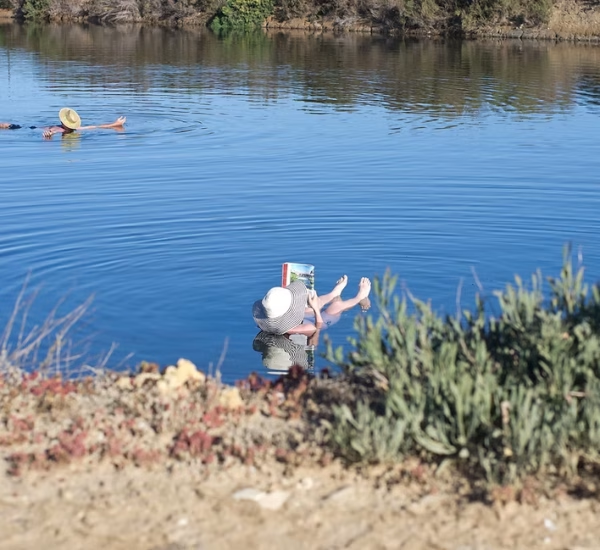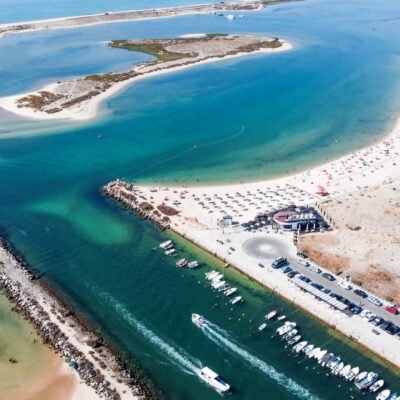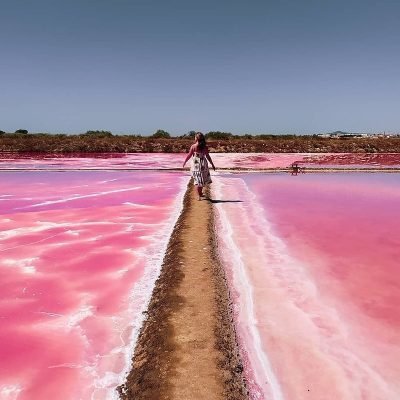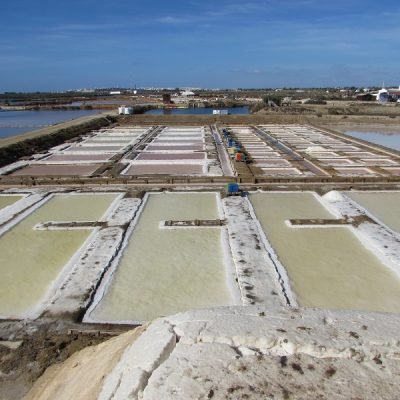
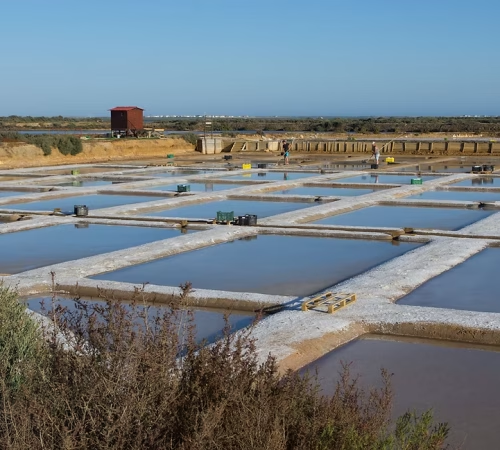
The salt pans still offer a landscape of unique cores, with tanks in shades of pink, blue, and white, which change according to the light and the time of year. In addition to being an important economic and ecological resource, they represent a complete sensory experience: walking between the tanks, hearing the sounds of the water and birds, and smelling the salt.
A further interesting piece of information about Salinas de Tavira is that they are habitat of species endemic to plants and small invertebrates adapted to saltwater, such as some algae and crustaceans, which make this ecosystem unique in the Algarve. Furthermore, during the summer, salt produced in the salt pans was traditionally collected by local communities, often being transported by traditional wooden boats, a method that reflects centuries of history and the region's connection to maritime economy and the traditional culture of the Algarve.
salterns work by evaporation of seawater in shallow tanks, a traditional process that allows salt to be extracted in an artisanal way. It is possible to observe the entire production technique, from the entry of saltwater to the crystallisation of the salt, maintaining methods that have been in use for decades.
Besides their cultural and economic value, the Tavira Salt Pans are also a biodiversity sanctuary. The area attracts numerous bird species, including the elegant Greater flamingo, cranes, sandpipers and other migratory birds, making the area perfect for Wildlife watching and nature photography.